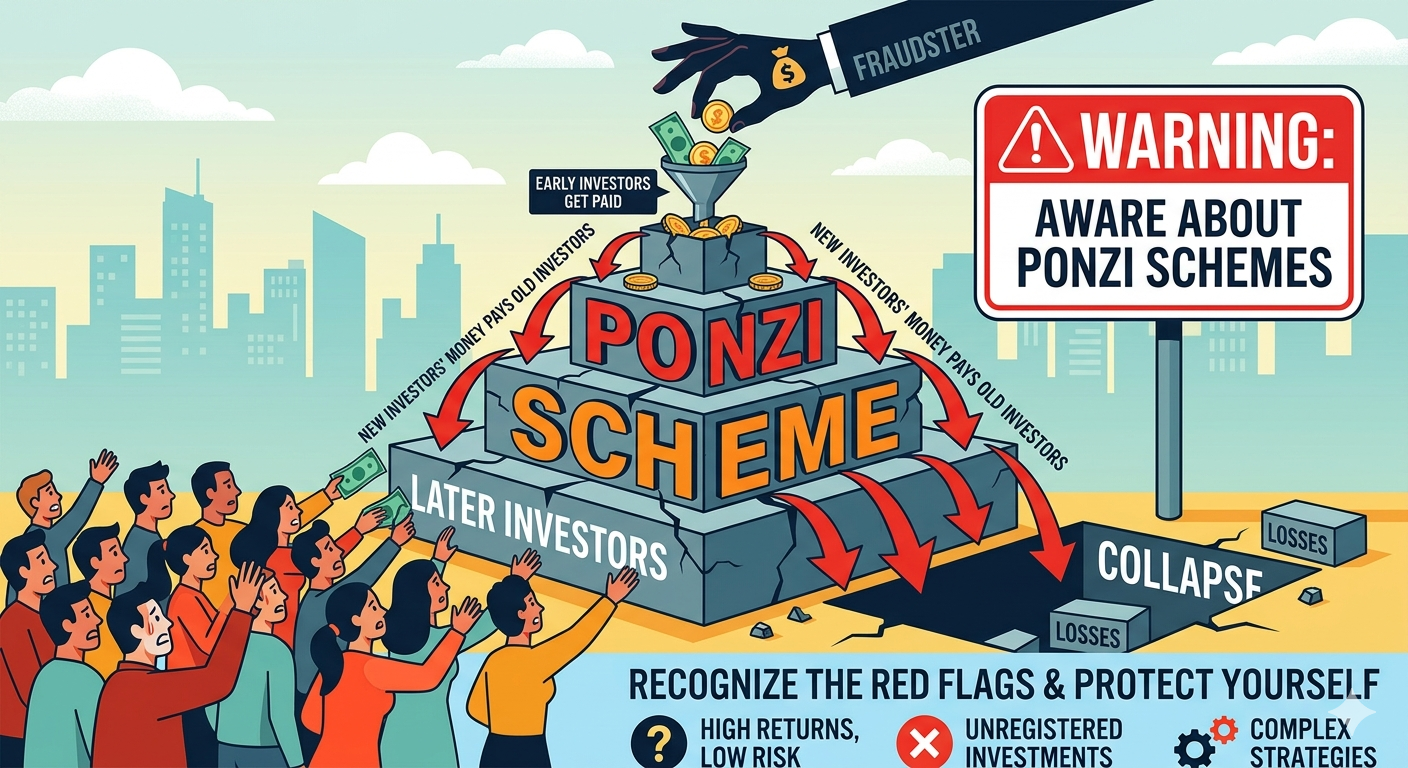
Named after Charles Ponzi, who famously defrauded investors in the 1920s, a Ponzi scheme is a fraudulent investing scam that generates returns for earlier investors with money taken from new participants.
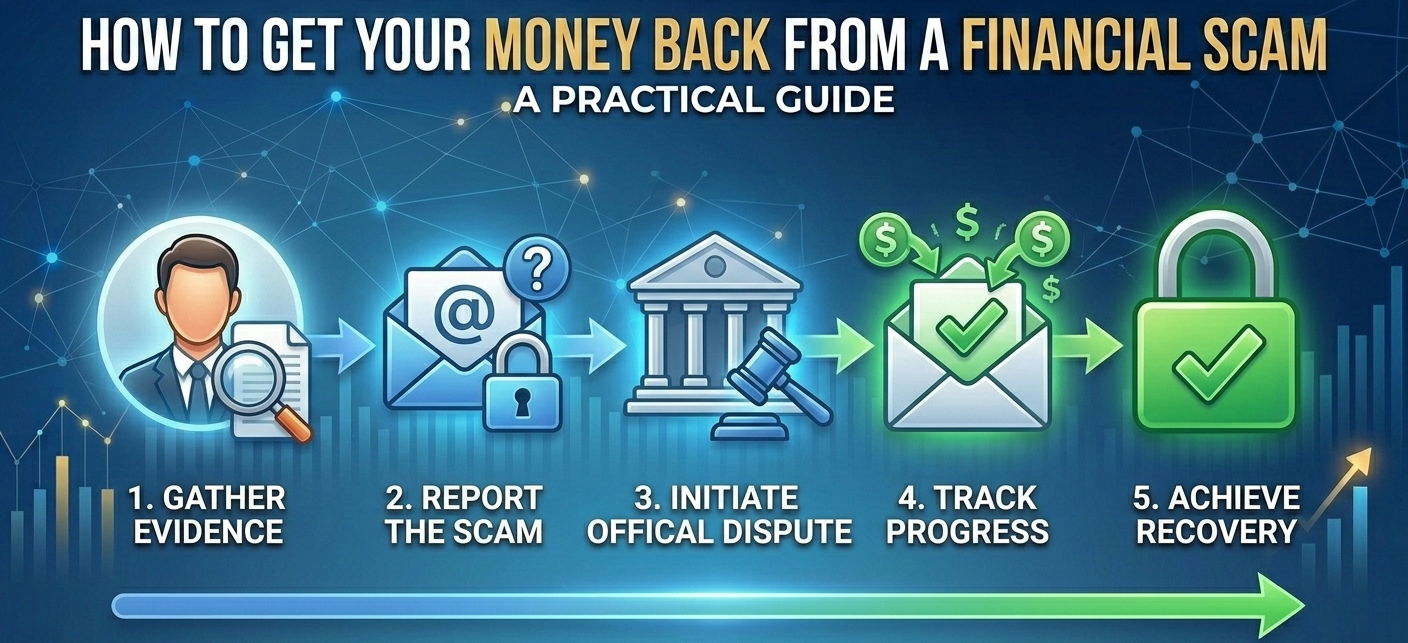
The “house of cards” eventually collapses when there aren’t enough new investors to pay the old ones. To protect your wealth, you need to look past the charismatic “success stories” and look at the math. If you realize you’ve been targeted, it is vital to report financial fraud online as quickly as possible to prevent others from falling into the same trap.
1. High Returns with Little or No Risk
In legitimate investing, the “Risk-Reward” trade-off is a law of nature. If you want high returns, you must accept high risk.
- The Red Flag: Any investment that promises “Guaranteed 15% monthly returns” or claims to be “safer than a savings account” while paying double-digit profits.
- The Reality: Even the most successful investors in history (like Warren Buffett) have years where they lose money. If an investment only goes up, it’s likely a fake.
2. Overly Consistent Returns
The financial markets are volatile. They go up and down based on global events, interest rates, and the economy.
- The Red Flag: An investment that provides the exact same positive return every single month, regardless of market conditions.
- The Reality: Bernie Madoff’s biggest red flag was that his “returns” never fluctuated. Real investments are “bumpy”; Ponzi schemes are “smooth” because the numbers are simply made up on a spreadsheet.
3. Unregistered Investments
Registration is key to investor protection. It gives you access to information about the company’s management and products.
- The Red Flag: The broker says the investment is “private” or “exempt from SEC registration.”
- The Action: If you discover a broker is selling unregistered securities without a license, you should file a complaint against a broker to alert regulatory bodies and the public.
4. Secretive or Complex Strategies
If you can’t explain how the money is made to a 10-year-old, you shouldn’t be investing in it.
- The Red Flag: The advisor uses “proprietary algorithms” or “offshore arbitrage” as an excuse for why they can’t explain the strategy.
- The Reality: If the “secret sauce” is too complex to understand, it is often a hallmark of an investment scam reporting case waiting to happen.
5. Difficulty Receiving a Payment
The moment you ask for your principal investment back, a Ponzi scheme operator will try to stop you.
- The Red Flag: They offer you even higher returns if you don’t withdraw, or they claim your funds are “locked” for a certain period.
- The Reality: They are trying to prevent the collapse. If they pay you out, they have less money to pay other investors.
How to Verify Before You Invest
Before handing over a single dollar, take these three steps:
- Check the CRD: Use FINRA’s BrokerCheck to see if the person is actually licensed.
- Ask for Audited Financials: Legitimate firms have third-party auditors.
- Search the Complaint List: Use FinanceComplaintList.net to see if other investors have reported trouble withdrawing their money.
The Bottom Line
If it sounds too good to be true, it is too good to be true. Ponzi schemes rely on secrecy and the victim’s “fear of missing out.” Don’t let a charismatic advisor talk you out of your common sense.