The allure of the stock market has always drawn investors looking to grow their wealth. However, alongside legitimate trading opportunities, a rising tide of sophisticated Stock Market Fraud has emerged. Unregulated trading platforms, fake investment advisors, and cloned brokerage websites cheat thousands of investors out of their hard-earned money daily.
If you realize that your broker is refusing withdrawals, demanding unexpected “clearance fees,” or has completely vanished, you are likely the victim of a Stock Market Scam. While discovering this is distressing, taking immediate, structured steps can help you protect your identity and begin the process to Report Scam Brokers and reclaim your funds.
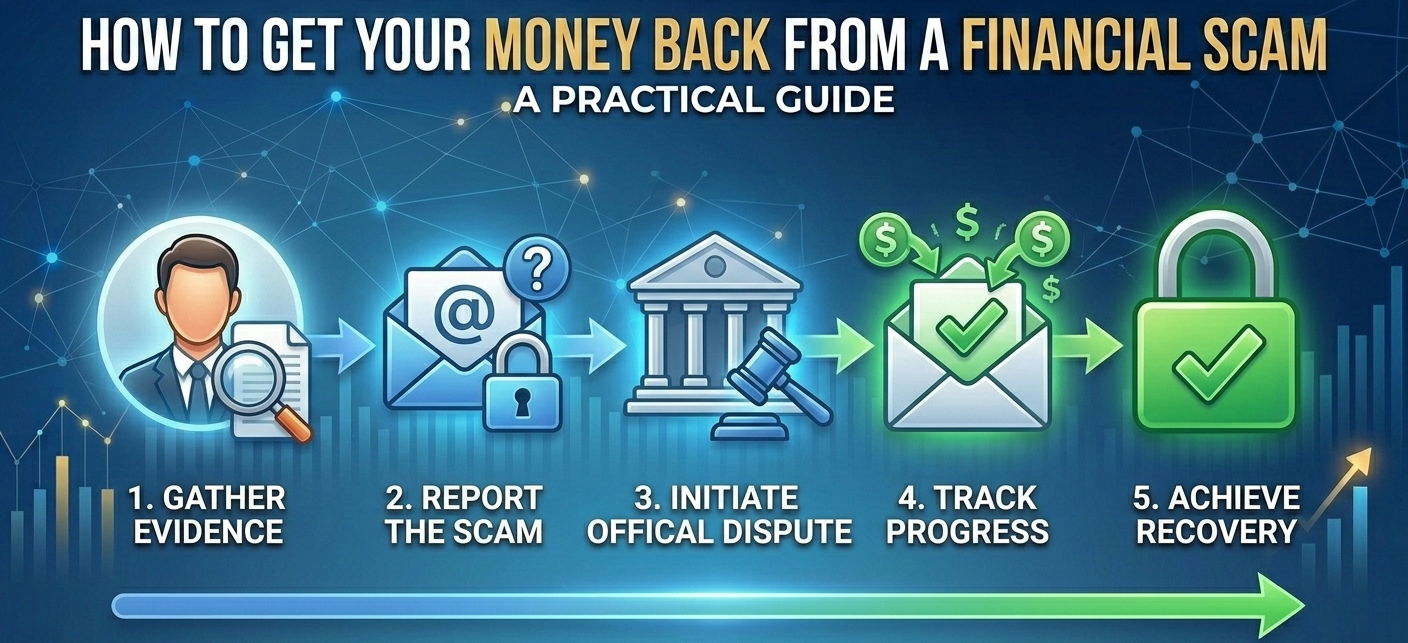
Step 1: Document and Freeze Everything
The moment you suspect foul play, your immediate priority is to preserve evidence and secure your financial perimeter. Scammers often lock accounts or delete trading histories once they realize an investor is onto them.
- Export Statements: Download every piece of data available from the trading dashboard, including deposit receipts, transaction histories, and balance sheets.
- Save Communications: Take screenshots and save copies of all emails, text messages, and chat logs (such as WhatsApp or Telegram) with the broker or account managers.
- Secure Bank Accounts: If you gave the broker access to your computer via remote desktop software (like AnyDesk or TeamViewer) or provided your banking details, contact your bank immediately to freeze your accounts and issue new cards.
Step 2: Report Scam Brokers to Financial Authorities
To trigger official investigations and stop fraudulent platforms from targeting others, you must file a report with the appropriate financial regulatory bodies.
- National Regulators: File an official complaint with the financial authority in your country, such as the Securities and Exchange Commission (SEC) or Financial Industry Regulatory Authority (FINRA) in the United States, or the Financial Conduct Authority (FCA) in the United Kingdom.
- Cybercrime Divisions: Because most modern stock market fraud operates online, report the incident to cybercrime units like the FBI’s Internet Crime Complaint Center (IC3) or your local equivalent.
Step 3: Log Your Case globally
Government agencies receive a massive volume of complaints daily, which can delay individual case processing. Submitting your case details to a specialized, secure public database like financecomplaintlist.net helps bridge this gap.
By detailing your experience, a dedicated team can verify your claim and cross-reference it within a global database. Because scam networks frequently reuse dummy corporate entities, bank accounts, and fake names across multiple targets, your report can provide the crucial link needed to track down a wider syndicate.
Step 4: Initiate Asset Recovery and Forensic Tracing
Recovering losses from a stock market scam requires tracking the movement of your money through the banking or digital ecosystem.
- Banking Tracing: Traditional wire transfers and credit card payments leave an established paper trail. Asset recovery specialists perform forensic accounting to trace where your funds were routed, uncovering the shell companies and “money mules” used by the fraudsters to hide the cash.
- Crypto Tracing: If the fraudulent broker convinced you to fund your account using cryptocurrency, advanced blockchain analytics are deployed. Investigators trace the tokens from wallet to wallet until they land on a regulated cryptocurrency exchange that enforces strict identity verification.
Step 5: Execute Legal Enforcement
Once your stolen funds are successfully traced to a specific bank account, corporate entity, or digital exchange wallet, the final phase of recovery begins:
- Bank Chargebacks: If you funded the scam via credit or debit card within a specific timeframe, your bank may be able to initiate a chargeback dispute.
- Freezing Orders: Backed by a verified forensic investigation report, legal professionals can petition courts or exchanges to freeze the destination accounts, preventing the scammers from withdrawing the assets before a legal reclamation can take place.
Avoid the Trap of Recovery Scams
When looking for assistance, always remain vigilant against secondary fraud. “Recovery scammers” frequently target individuals who have already lost money to a stock market scam, reaching out under the guise of elite hackers, lawyers, or government officials who promise immediate results for an upfront fee.
Legitimate asset recovery is a methodical process built on data verification, forensic tracing, and regulatory compliance.
Don’t let fraudsters keep what is yours. Take swift action to secure your evidence, report the fraudulent platform, and take the first step toward reclaiming your investments today.