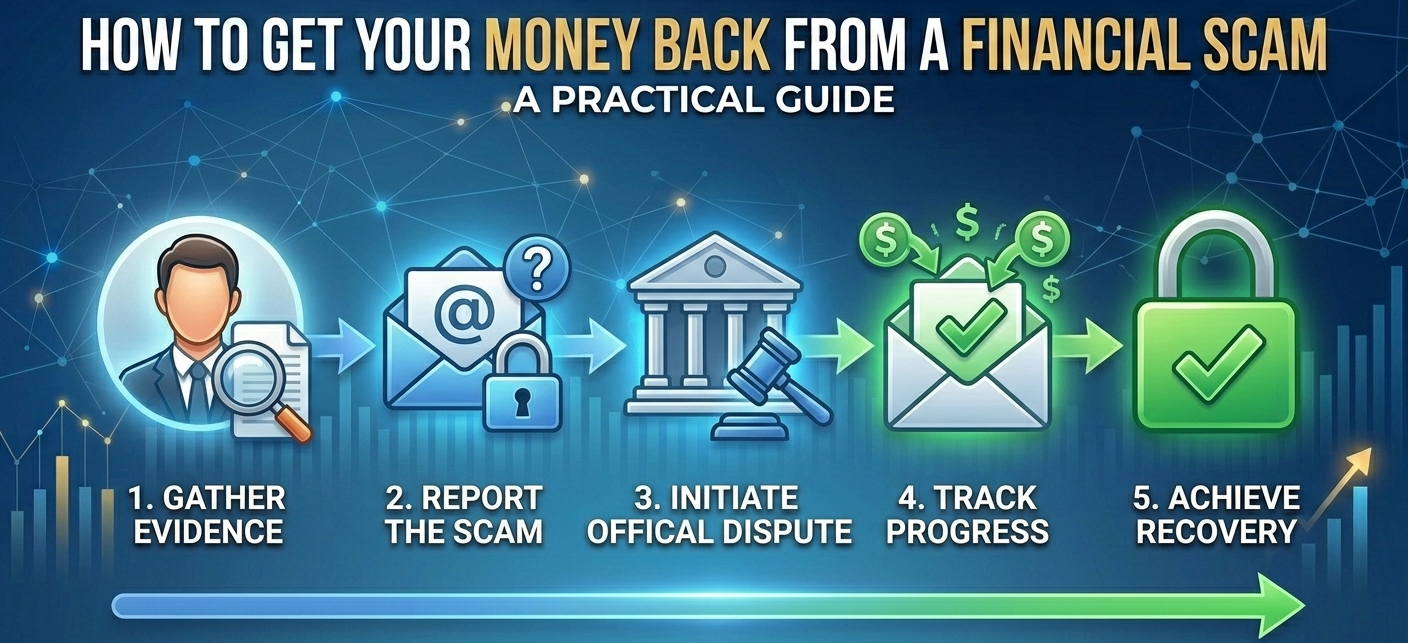
Discovering that a foreign exchange broker has locked your account, manipulated trades, or blocked your withdrawals is a stressful experience. While rogue trading platforms rely on panic and confusion to stall victims, taking immediate, structured action significantly improves your chances of halting further losses, exposing the platform, and pursuing fund recovery.
Step 1: Cut Off All Financial Contact Immediately
The moment you suspect a broker is fraudulent, stop all deposits. Scammers frequently invent fake “withdrawal taxes,” “verification fees,” or “liquidity charges” to extract one last payment before disappearing.
- Do not pay release fees: Legitimate brokers deduct applicable fees directly from your account balance; they never demand external wire transfers or crypto deposits to unlock funds.
- Revoke device access: If an “account manager” convinced you to install remote desktop software (such as AnyDesk or TeamViewer), uninstall it immediately and change your banking and email passwords.
Step 2: Preserve Every Piece of Evidence
Fake trading websites often shut down or rebrand under a new domain within days of being exposed. Before the platform vanishes, build a complete digital paper trail:
- Platform details: Save the exact website URLs, platform names, app links, and any claimed registration or license numbers.
- Account records: Take full-screen captures of your trading dashboard, account balance, trade history, and rejected or pending withdrawal requests.
- Transaction receipts: Download bank statements, wire transfer confirmations, credit card receipts, or cryptocurrency transaction hashes and wallet addresses.
- Communication logs: Export all emails, WhatsApp/Telegram chats, SMS messages, and phone numbers used by the broker’s representatives.
Step 3: Put Your Withdrawal Request in Writing
Send a formal email to the broker’s official support address requesting the immediate withdrawal of your remaining balance. Even if you expect them to ignore or reject it, a timestamped email creates crucial proof for banks and investigators that the broker breached its terms and denied access to your money.
Step 4: Document and Expose the Broker on Finance Complaint List
Publishing a verified record of the fraud helps warn other traders before they deposit money into the same scheme and establishes a documented timeline of misconduct.
You can submit a detailed report directly through the Finance Complaint List portal. When filing your forex fraud report on the platform:
- Include the broker’s name, website domain, your account details, deposit/withdrawal records, and copies of your communication logs.
- Choose whether to submit publicly or protect your privacy through anonymous reporting options.
- Once reviewed and verified by the team, your case is added to a searchable public database so other investors checking the broker can spot the red flags early.
Step 5: Contact Your Bank or Payment Provider for a Reversal
Speed is critical when disputing fraudulent transactions. Contact your bank, card issuer, or payment processor right away and explain that you were defrauded by an unregistered financial broker:
- Credit or Debit Cards: Request a chargeback under merchant fraud or “services not rendered” rules. Submit your screenshots showing that withdrawal requests were denied and that the broker operates without authorization.
- Bank Wire Transfers: Ask your bank’s fraud department to initiate an immediate wire recall or swift trace, especially if the transfer occurred within the last 24 to 72 hours.
- Cryptocurrency Transfers: While blockchain transactions cannot be reversed directly, report the scammer’s wallet addresses to the legitimate crypto exchange you used to purchase the funds so they can flag the destination accounts.
Step 6: File Official Complaints with Regulators and Law Enforcement
Formal complaints trigger official investigations and create the police or regulatory case numbers that banks often require during fraud disputes:
- Financial Regulators: Verify whether the broker holds a real license—many scammers clone the names of legitimate firms. Report unauthorized brokers to your national financial regulator (such as the FCA in the UK, CFTC/NFA in the US, ASIC in Australia, or SEBI/RBI channels in India).
- Cybercrime Authorities: File an official report with your national cybercrime unit (such as the FBI’s IC3 at ic3.gov in the US, Action Fraud in the UK, or the National Cyber Crime Reporting Portal at cybercrime.gov.in in India).
- Local Police: Lodge a formal police report or FIR to obtain an official paper record of the financial crime.
Warning: Watch Out for “Recovery Room” Scams
After reporting a scam online, victims are frequently targeted by secondary scammers posing as “fund recovery agents,” “blockchain hackers,” or fake government lawyers.
- Never pay upfront fees to anyone promising guaranteed fund recovery.
- Never share your crypto wallet seed phrase or grant remote access to your computer.
- Legitimate fund recovery only happens through official bank chargebacks, licensed legal channels, or law enforcement asset seizures.
If you have been targeted by an unlicensed trading platform, start by gathering your transaction records and filing an official report on Finance Complaint List to put the broker on record and help protect the wider trading community.