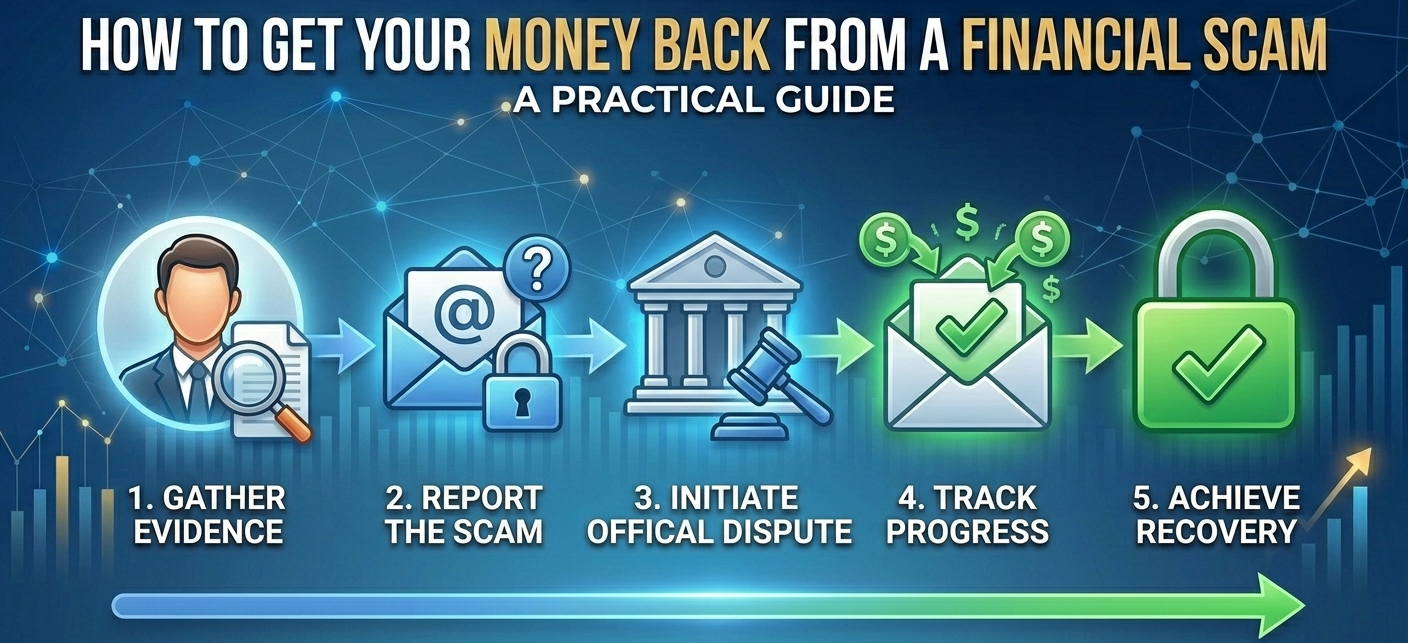
Falling victim to a cryptocurrency scam is a devastating experience. The decentralized and irreversible nature of blockchain transactions often leads victims to believe their funds are gone forever. While recovery is difficult, it is not impossible.
The most critical step you can take is to act immediately. Delaying action decreases the chances of freezing the assets. This comprehensive guide will walk you through the essential steps to Report a Crypto Scam, trace your funds, and notify the proper authorities.
Step 1: Secure Your Remaining Assets Immediately
Before you do anything else, you must prevent further loss. Scammers often gain access to entire wallets or exchange accounts.
- Move funds: If you still have access to the wallet where the theft occurred, immediately move any remaining cryptocurrency to a completely new, secure hardware wallet.
- Change credentials: Change passwords and 2FA settings for your email, exchange accounts, and any compromised wallets.
- Revoke Smart Contract Approvals: If you interacted with a malicious decentralized finance (DeFi) site, the scammers might have unlimited spending approval. Use tools like Revoke.cash or Etherscan’s Token Approvals to disconnect your wallet from suspicious dApps.
Step 2: Document Everything (The Evidence Trail)
You need a detailed record of the fraud to file a successful report. Do not rely on memory; gather digital proof.
Collect the following information:
- Transaction IDs (Hashes): This is the most crucial piece of evidence. Find the specific transaction ID on the blockchain explorer (e.g., Etherscan for Ethereum, Blockchain.com for Bitcoin).
- Scammer’s Wallet Address: The public address where your funds were sent.
- Communication Records: Screenshots of emails, Telegram chats, WhatsApp messages, dating profiles, or social media interactions with the scammer.
- Website URLs: The addresses of the fake investment platform or fraudulent exchange.
- Proof of Payment: Records showing how you acquired the initial cryptocurrency (e.g., bank transfer records showing funds sent to a legitimate exchange like Coinbase or Binance to buy the crypto that was later stolen).
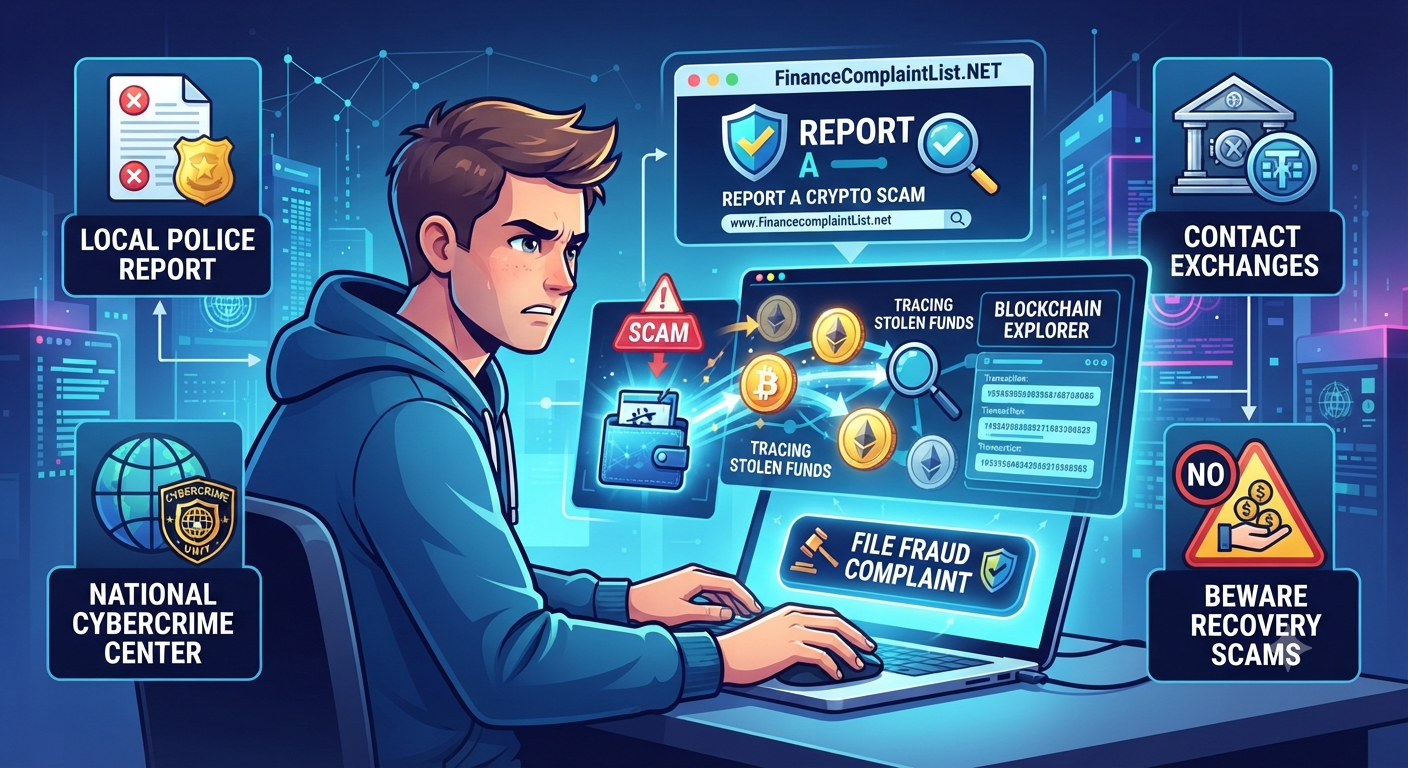
Step 3: Trace the Stolen Funds (Blockchain Analysis)
While you cannot reverse the transaction, you can track where the funds go. Public blockchains are transparent.
- Use Blockchain Explorers: Paste the transaction hash or the scammer’s address into the relevant explorer. You can watch the funds move in real-time.
- Follow to an Exchange: Often, scammers move stolen funds to a centralized exchange (CEX) to cash out into fiat currency.
- Utilize Crypto Tracing Tools: If you are unfamiliar with blockchain analysis, consider using tools like Chainalysis (via their Reactor OR belirli services for victims) or Arkham Intelligence to visualize the fund flow.
If you can prove the funds landed in a specific, regulated exchange, you have a better chance of freezing them.
Step 4: Report the Crypto Scam to Authorities
This is a mandatory step if you hope to involve law enforcement in freezing assets at an exchange.
1. National Cybercrime Centers
- United States: File a report with the FBI’s Internet Crime Complaint Center (IC3) at ic3.gov. Be as detailed as possible, including all transaction hashes.
- United Kingdom: Report to Action Fraud, the UK’s national reporting center for fraud and cybercrime.
- International: Most countries have a cybercrime division within their national police force. Check your local government resources.
2. Local Police
File a local police report to obtain a case number or reference number. Your bank or the receiving exchange may require this official documentation to take action.
Step 5: File Complaints with FinanceComplaintList.net
In addition to legal authorities, it is vital to document the scam on public reporting platforms. This creates a searchable public record that helps warn other potential victims and puts pressure on the fraudulent entities.
Submit a detailed report on FinanceComplaintList.net. When filing your complaint regarding the cryptocurrency scam:
- Provide Specifics: Include the names of the fake platform, wallet addresses involved, and the timeline of events.
- Upload Evidence: Attach screenshots of communication and transaction IDs.
- Warn Others: By making your complaint public (or semi-public depending on the site’s privacy options), you contribute to a database that helps others Report a Crypto Scam before they lose money.
Step 6: Contact the Exchanges Involved
If your blockchain analysis shows the stolen funds moved to a known, centralized exchange (e.g., Binance, Kraken, Coinbase), you must contact their fraud department immediately.
- Use their official support channels and submit a “Law Enforcement Request” or fraud report.
- Provide the transaction hashes showing the deposit into their platform.
- Provide the police report number you obtained in Step 4.
If notified quickly enough, and if the funds have not already been moved off-platform or converted to privacy coins, the exchange may temporarily freeze the associated account pending a police investigation.
Important Warning: Beware of Recovery Scams
After you Report a Crypto Scam, you may be targeted again by “recovery agents” or “hackers” who claim they can recover your stolen funds.
- This is almost always a secondary scam.
- Legitimate law enforcement and blockchain forensic companies generally do not reach out to victims via social media DMs offering guaranteed recovery for an upfront fee.
- Never give anyone your seed phrase, private keys, or remote access to your computer.
- Never pay upfront fees for recovery services.
While tracing stolen funds is complex, following these steps provides the structured approach necessary to maximize the slim chances of recovery and bring the scammers to justice. Start by documenting the fraud on FinanceComplaintList.net.