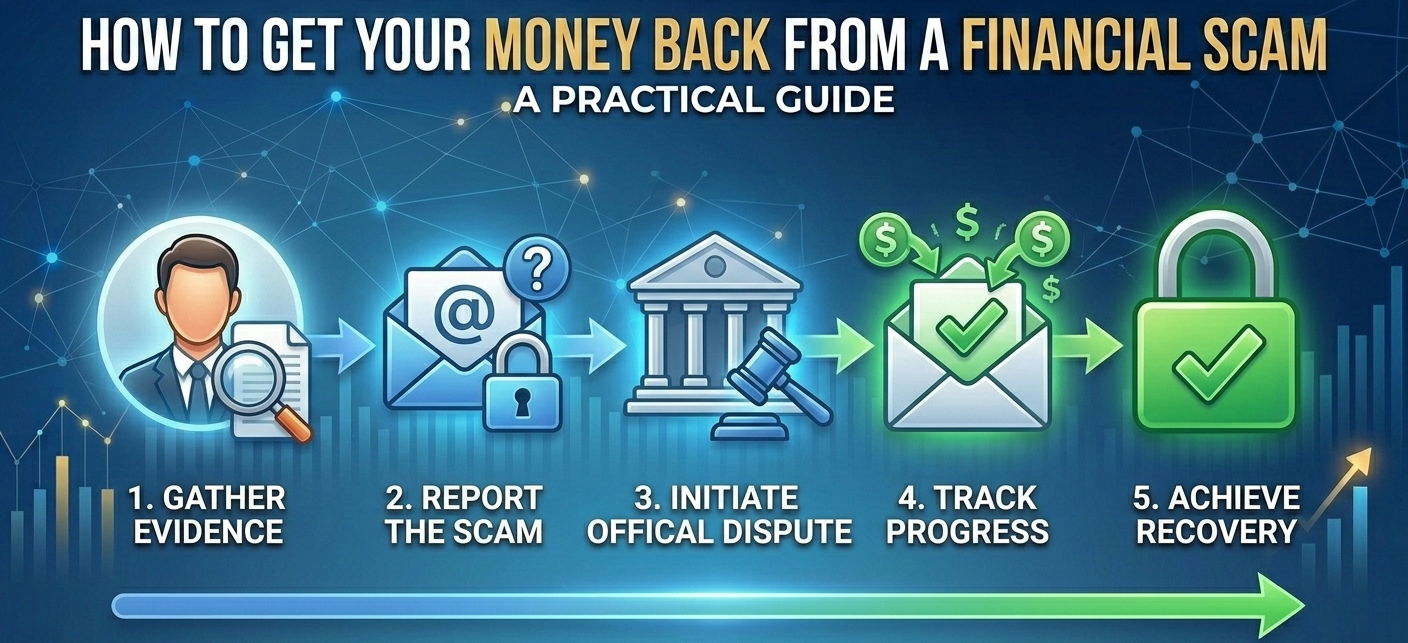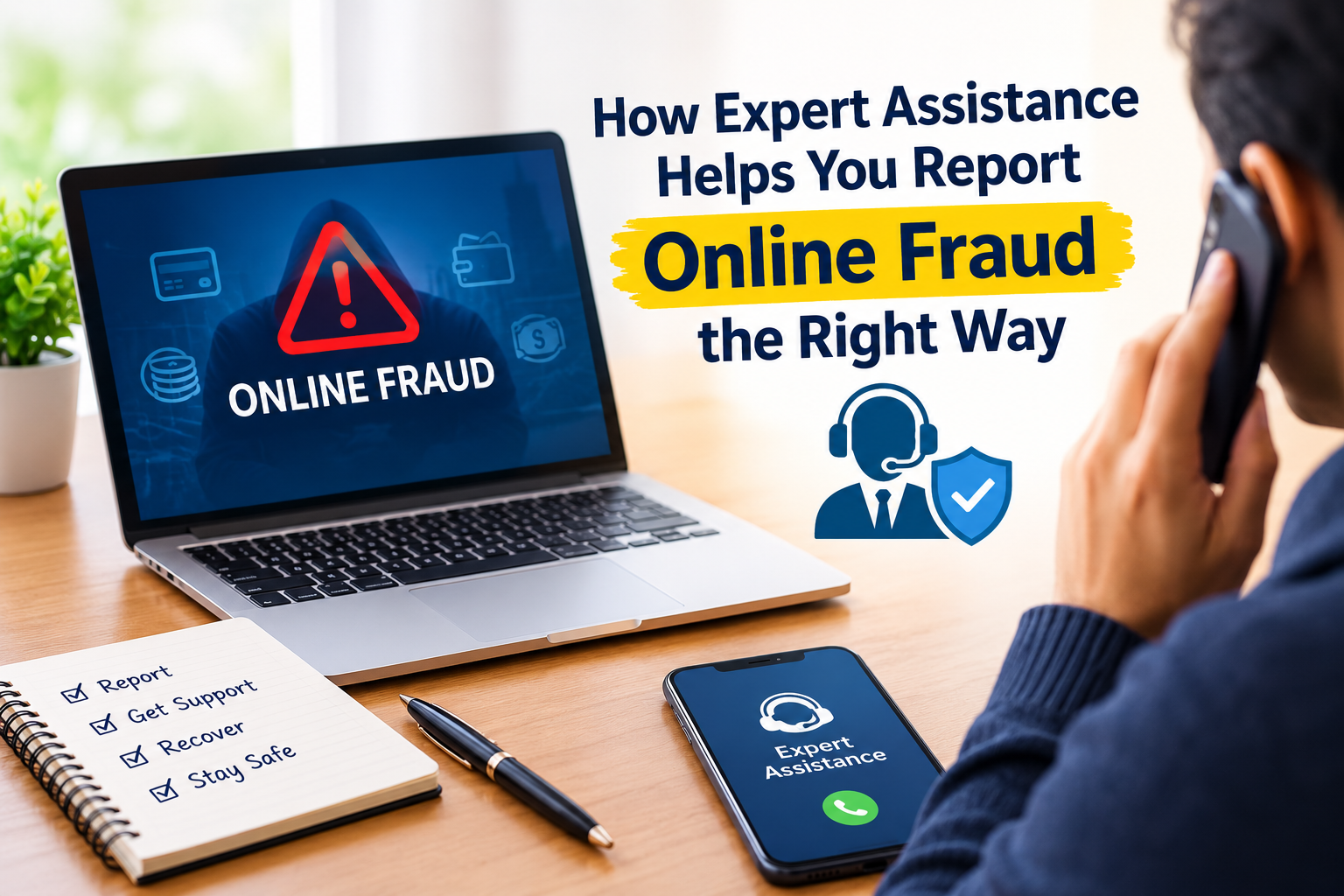
Losing money to an online scam is quite frustrating on its own. What often makes it worse is what happens in the days right after like a flood of contradictory advice, strangers messaging you out of nowhere with promises to “get your money back,” and no clear sense of who’s actually trying to help versus who’s circling because you’re an easy second target. This is exactly the point where real guidance to report online scam matters, and where it’s worth being precise about what expert assistance can and can’t actually do for you.
What Does “Expert Assistance” Actually Mean After a Scam?
Good guidance after a scam isn’t magic, and it is not guaranteed either. It’s someone who has seen many of these cases and can walk you through which details matter to a bank’s fraud department, which authority applies to your specific type of fraud, and how to turn a chaotic story into an internet fraud report that’s specific enough for someone to act on. It’s a method, not a miracle. Anyone offering more than that like a guarantee of money back, a promise to “recover” your funds for a fee then they are not offering expert assistance. They’re running the next scam.
Why Do So Many “Recovery Experts” Turn Out to Be a Second Scam?
In June 2026, the FTC issued a consumer alert about scammers impersonating themselves as FTC employees, complete with fake employee ID photos texted to victims, offering to recover money already lost to fraud in exchange for a fee. It’s part of a broader pattern security researchers have flagged for years: people who already lost money once get contacted again, often within weeks, by someone claiming they can get their money back. They use the same tricks every time like payment demanded before any work starts, a guaranteed percentage or dollar amount promised, and requests for information no legitimate helper would ever need, like a crypto wallet seed phrase, your online banking password, or even remote access to your computer.
What Can Legitimate Guidance Actually Help You Do?
This is where real value shows up, and it has nothing to do with promising your money back. A knowledgeable person can help you figure out which authority applies to your situation, since crypto fraud, forex scams, romance scams, and fake trading platforms all follow different reporting paths and different agencies so it can be quite confusing for an individual to find it and file a case. They can actually help you organize scattered data like screenshots, transaction IDs and wallet addresses into a timeline that a bank or regulator can actually use for a report to be made. And they can help you report online scam activity through a Fraud report website that names the platform, the dates, the amounts, and the contact details clearly enough to be searchable and useful to the next person looking into the same scammer.
Should You Still File Reports With Official Authorities Too?
Yes, always and this isn’t optional or secondary. Filing your internet fraud report with your national cybercrime unit or financial regulator creates the official record, the one that can trigger a broader investigation if enough similar reports come in. In the US that’s the FTC and the FBI’s IC3; in the UK it’s Action Fraud; in India it’s the National Cyber Crime Reporting Portal or the 1930 helpline, and SEBI’s SCORES portal specifically for market-related fraud and no amount of private guidance can replace that step.
Where Does a Fraud Report Website Like Finance Complaint List Fit In?
It’s worth being upfront about what a site like ours actually does, because clarity here protects you. Finance Complaint List isn’t a recovery service, and it doesn’t promise to get your money back and to be honest, nobody can legitimately promise that. What it does is give you a place to report online Scams that become art of a larger searchable public record, so the next person researching the same platform, broker, or wallet address before they hand over their own money can see what happened to you and avoid the same trap. hat is what we consider the real form of protection this kind of reporting offers.
What Should You Look for Before Trusting Anyone Who Offers to “Help”?
Treat these as non-negotiable checks before you trust anyone offering to help. Someone genuinely willing to assist you will never ask for payment before doing any work, never promise a specific amount will be recovered, and never need your OTP, password, or remote access to your computer. They are always transparent about what they can and can’t do, and they’ll tell you upfront to keep filing with official channels regardless of what happens next. If someone pressures you continuously to act immediately, pay first, or skip reporting to the authorities because they know how to solve or handle this situation, then you should walk away at that time.
Conclusion: Why Getting This Distinction Right Matters
Scams don’t stop being dangerous once you’ve already lost money, they just change shape. The people who target fraud victims a second time are betting on hope which they think will override caution, that after losing money once, you’ll want so badly to believe someone can undo it that you won’t ask any hard questions. The most useful thing expert guidance can do isn’t recovering your funds; it is helping you report online fraud in a way that is clear, complete, and actually useful to your bank, to the right regulator, and to a public record that makes the next person’s decision easier than yours was.